Suede vs Leather Boots: Which Is Right For You? | Boots by TL
Leather Guide · 2026-04-05
When customers walk into a boot store or browse online, they rarely ask about "full-grain" or "top-grain." What they actually ask is simple: Is this soft? Will I be able to break it in?
That is the right question. And the answer depends less on fancy leather terminology and more on whether you are looking at suede or leather—and what brand made it.
The real question: Suede or leather?
Most boot shoppers do not need to understand the difference between full-grain and top-grain. What matters is understanding the two main categories you will encounter: suede and leather.
Both are real. Both can be high quality. Both have different feels and different care requirements. The choice is not about which is "better." It is about which fits your lifestyle and what you want to feel on your foot.
Suede: Soft, velvety, and requires attention
Suede comes from the underside of the hide, sanded into a soft nap. When you touch suede, it feels immediately luxurious—velvety, soft, and almost delicate.
What suede feels like
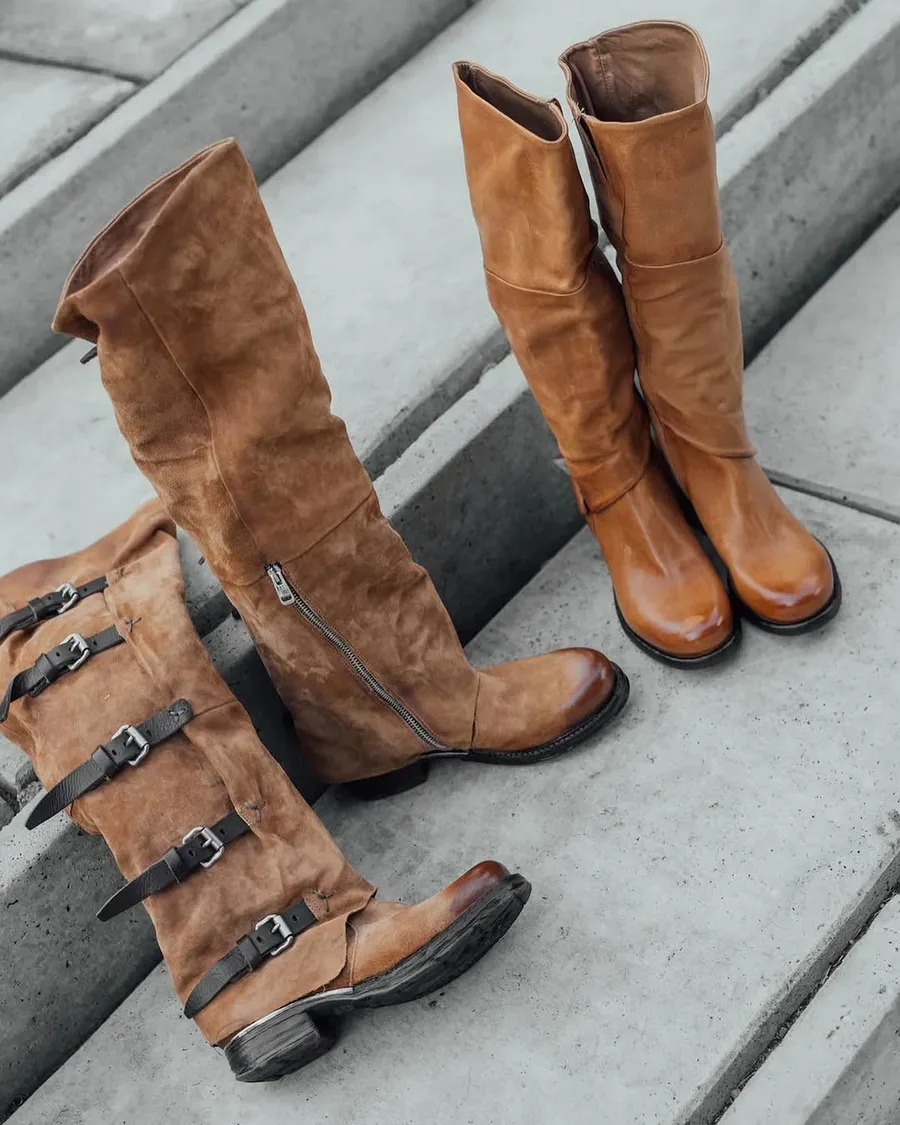
Look at the A.S.98 Shaylynn tall boot in suede. Run your hand across it. That is what quality suede feels like: soft enough to feel premium, but still substantial enough to hold its shape. The nap (the fuzzy texture) is what gives suede its signature look and feel.
The A.S.98 Shaylynn in suede: soft to the touch, with that characteristic velvety nap. Notice how the color has natural variation—that is suede aging and developing character.
Break-in with suede
Here is the good news: suede boots like the Shaylynn are soft from day one. You are not signing up for weeks of pain. The leather is already supple, and your foot will feel comfortable immediately.
The trade-off is maintenance. Suede shows dirt, water stains, and scuffs more easily than leather. A light rain can mark it. Dust and debris cling to the nap. If you wear suede boots in winter or bad weather regularly, you will spend more time caring for them.
Suede care basics
- Brush regularly: Use a soft suede brush to restore the nap and remove surface dirt
- Protect early: Apply a suede protector spray before wearing (this helps repel water and stains)
- Spot clean: For small marks, use a suede eraser or a soft cloth
- Avoid heavy rain: Suede and downpours do not mix well
- Store carefully: Keep suede boots in a cool, dry place away from direct sunlight
If you love the look and feel of suede and do not mind the maintenance, suede boots are worth it. They age beautifully when cared for, developing a rich patina over time.
Leather: Durable, forgiving, and soft when it matters
Leather comes from the grain side of the hide. Quality leather boots feel substantial in your hand—there is weight and structure to them. But here is what surprises people: good leather is still soft.
What quality leather feels like
The A.S.98 Sid boot in leather is a perfect example. Pick one up. The leather is soft to the touch, supple, and immediately comfortable. It does not feel stiff or plastic-like. That is what you want in a quality leather boot.
The A.S.98 Sid in leather: soft and supple, but with visible structure and character. The leather develops a beautiful patina over time, and it forgives neglect better than suede.
The difference between suede and leather is not softness—it is texture and durability. Leather has a grain (you can see and feel the natural hide pattern). Suede has that fuzzy nap. But both good suede and good leather feel soft on your skin.
Break-in with leather
Leather boots like the Sid are also soft from day one. A.S.98 specifically chooses leather that is supple and wearable immediately. You are not buying a boot that will hurt for two weeks and then magically become comfortable.
The advantage of leather over suede is forgiveness. Leather is more resilient. A scuff on leather is often just a mark—it does not damage the surface the way a stain can damage suede. Leather also handles weather better.
Leather care basics
- Condition regularly: Use a leather conditioner every few months to keep the leather nourished and supple
- Wipe clean: After wearing, simply wipe off dirt and dust with a soft cloth
- Spot treat stains: For marks, use a leather cleaner or a damp cloth
- Protect from extreme water: While leather handles light rain better than suede, heavy water exposure still requires care
- Let it age: Unlike suede, leather actually improves with age. Creases darken, the color deepens, and the boot develops character
Leather boots are lower maintenance than suede. They forgive occasional neglect. And they age beautifully—a well-cared-for leather boot looks better at five years than it did at five months.
What "soft" actually means in boots
When customers ask if a boot is soft, they usually mean: Will this feel comfortable on my foot without a painful break-in?
Both suede and quality leather can be soft in this way. The Shaylynn (suede) and the Sid (leather) are both soft and wearable from day one. The difference is not comfort—it is maintenance and how the boot ages.
Do not confuse softness with weakness. A soft leather boot is not fragile. A.S.98 leather is soft and durable. It is soft because the tanning and finishing are done well, not because the material is cheap or thin.
Why some leather boots feel stiff or plastic
If you have ever tried on a boot that felt stiff, plastic-like, or uncomfortable from the start, that is usually a sign of cheap leather or heavy coating. That kind of boot might soften slightly over time, but it often never develops the same character or comfort as a boot made from quality materials.
The boots we source—A.S.98, Freebird, Corral—all prioritize leather that feels good immediately. That is not a coincidence. It is a choice these brands make about materials and finishing.
Comparing suede and leather side by side
| Aspect | Suede | Leather |
|---|---|---|
| Feel | Velvety, fuzzy nap | Smooth grain, structured |
| Immediate comfort | Soft from day one | Soft from day one |
| Break-in period | None (already soft) | None (already soft) |
| Maintenance | Higher (regular brushing, protection) | Lower (occasional conditioning) |
| Weather resistance | Low (shows water stains easily) | Higher (handles light rain) |
| Durability | Good with care, shows wear visibly | Excellent, ages beautifully |
| Aging | Develops patina, can look worn | Develops character, looks better over time |
| Best for | Dry climates, careful owners | All-weather, lower-maintenance wear |
Real examples from our inventory
A.S.98 Shaylynn (Suede)
This is a tall suede boot with buckle straps and a substantial sole. The suede is soft and luxurious. It breaks in immediately—no pain, just comfort. The trade-off: it needs regular brushing and protection from water. If you love the look and do not mind the care, this is an excellent choice.
A.S.98 Sid (Leather)
This is a studded leather boot with metal hardware and a rock-and-roll attitude. The leather is soft and supple, yet structured. It is comfortable from day one and requires less maintenance than suede. The leather will develop a beautiful patina as you wear it—creases will darken, and the boot will look more interesting over time.
Freebird Knox (Leather)
Freebird leather boots like the Knox are known for hand-worked, expressive leather. The material feels lived-in from the start—soft, textured, and ready to develop character. Freebird leather ages beautifully and forgives wear patterns.
Corral Black Cross Wings (Leather)
Corral western boots use sturdy leather with traditional craftsmanship. The leather is soft but substantial. These boots are built to last and improve with wear. The leather will develop a rich patina over years of use.
What to ask when shopping for boots
Instead of getting lost in leather terminology, ask these practical questions:
- Does this feel soft on my skin? (Both suede and quality leather should)
- Can I wear this today without pain? (Yes, if it is from a good brand)
- Am I willing to maintain this? (Suede requires more care)
- What is my lifestyle? (Dry climate = suede is fine; rainy/snowy = leather is better)
- Do I want to see the boot age and develop character? (Leather does this beautifully; suede shows wear more visibly)
The practical takeaway
Buy the boot that feels right on your foot and matches your lifestyle.
If you love the velvety feel of suede and do not mind brushing and protecting your boots, get suede. If you want something lower-maintenance that ages beautifully and handles weather better, get leather.
Both suede and quality leather are soft. Both can be comfortable from day one. The difference is not about which is "better"—it is about which fits your life.
Why we focus on these brands
A.S.98, Freebird, Corral, and similar brands we carry all share something in common: they use soft, quality materials that are comfortable from day one. They do not make you suffer through a break-in period. They do not use plastic-like coatings that never soften.
That is why customers keep coming back. That is why these boots perform so well pre-owned. When a boot starts soft and comfortable, it stays that way—and it only gets better with age.
Final word
Forget the jargon about full-grain and top-grain. The real question is simple: Does this feel good on my foot, and am I willing to care for it?
If the answer is yes to both, you have found your boot. Whether it is suede or leather, soft and well-made boots are an investment that pays off every time you put them on.